Collaborators: Meha Jain, University of Michigan; Adam Reimer, Michigan State University; Julie Doll, Michigan State University
Funding: USDA AFRI Foundational Program
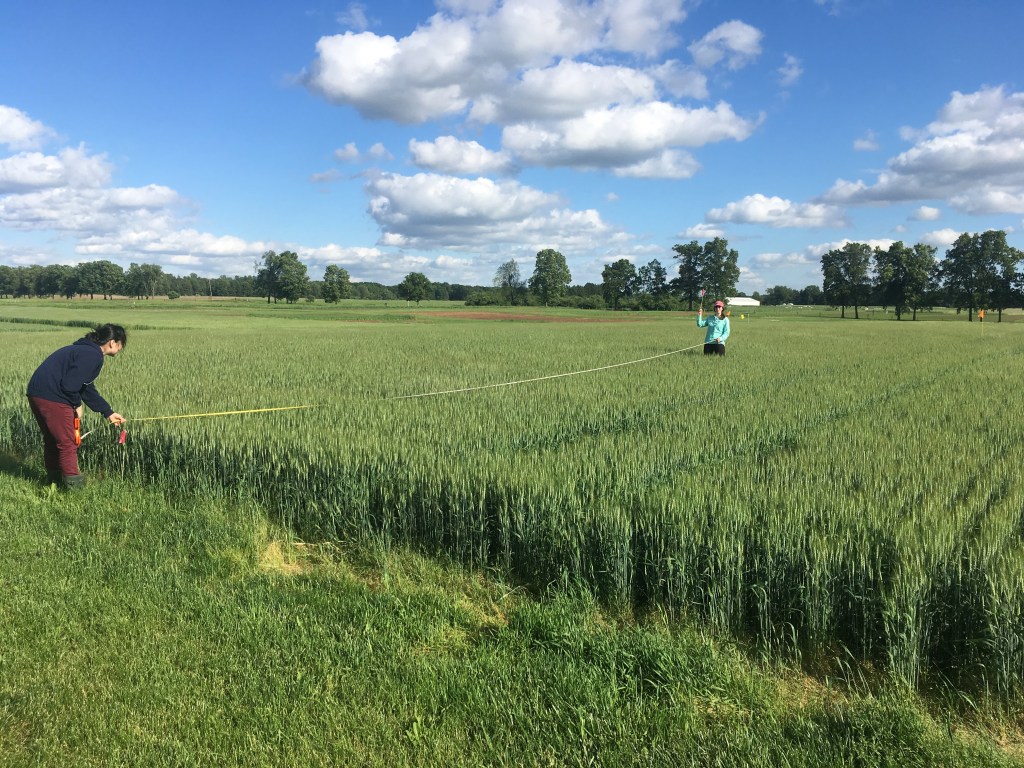
Increasing the diversity of grain agroecosystems with cover crops can reduce the negative environmental impacts of grain cropping systems, including greenhouse gas emissions and water pollution, and increase resilience to climate variability. Using cover crop mixtures that combine complementary plant traits may enhance these services, yet mixtures are understudied compared to single species cover crops. Even less well understood are the impacts of cover crops (both mixtures and single species) at landscape and decadal scales. A foundational understanding of linkages between cover crops, ecosystem processes, and resilience is needed to increase ecosystem services from agricultural landscapes.
In this project, we: (i) determined how a legume-grass cover crop mixture affected nitrogen retention within three long-term management legacies at the Kellogg Biological Station Long-term Ecological Research (LTER) Main Cropping System Experiment; (ii) used remote sensing to assess current cover crop use on working agricultural lands in Michigan, and how cover crops affected the stability of crop yields over time; (iii) measured how cover crops impacted nitrogen and phosphorus mass balances (an indicator of potential nutrient pollution) on farms spanning different management legacy, climate, and soil conditions in Michigan; and, (iv) engaged with farmers and other agricultural stakeholders to share science-based knowledge through Roundtable Discussions. This project identified practices that reduce greenhouse gas emissions and nutrient losses to waterways, and developed innovative methods for assessing agricultural practices at landscape scales.
 Soil and Agroecosystems Lab